

Building the Future of Pediatric Behavioral Health in Rhode Island
Integrated Behavioral Health Model

Every Interaction Matters: Why Adoption Competency Belongs Across Healthcare
Apotion Competency and Care

Measuring What Matters: How Measurement-Based Care Is Advancing Outcomes for Children and Youth in New England
Measurement Based Care- Children’s Behvaioral Health

Why Kids Can't "Just Turn It Off": The Impact of Digital Design on Child Wellbeing
Social Media and Children’s Mental Health

Why Peer Advocacy & Youth Voice Matter for Behavioral Health
For years, I believed that staying silent about my mental health was the best way to protect the people around me. Growing up with OCD, anxiety, and depression, I carried an overwhelming sense of guilt that kept me from asking for help. It wasn't until I faced my own mental health crisis that I realized silence wasn't protecting anyone—it was preventing healing.
That experience ultimately led me to Youth MOVE Massachusetts, where I now help other young people find the support and community I once needed. Through peer support, advocacy, and leadership opportunities, we empower youth and young adults to share their stories, advocate for themselves, and shape the systems designed to serve them. When young people are heard and treated as experts in their own experiences, meaningful change becomes possible.
My journey has shown me that lived experience is not a weakness—it's a powerful tool for connection, hope, and transformation
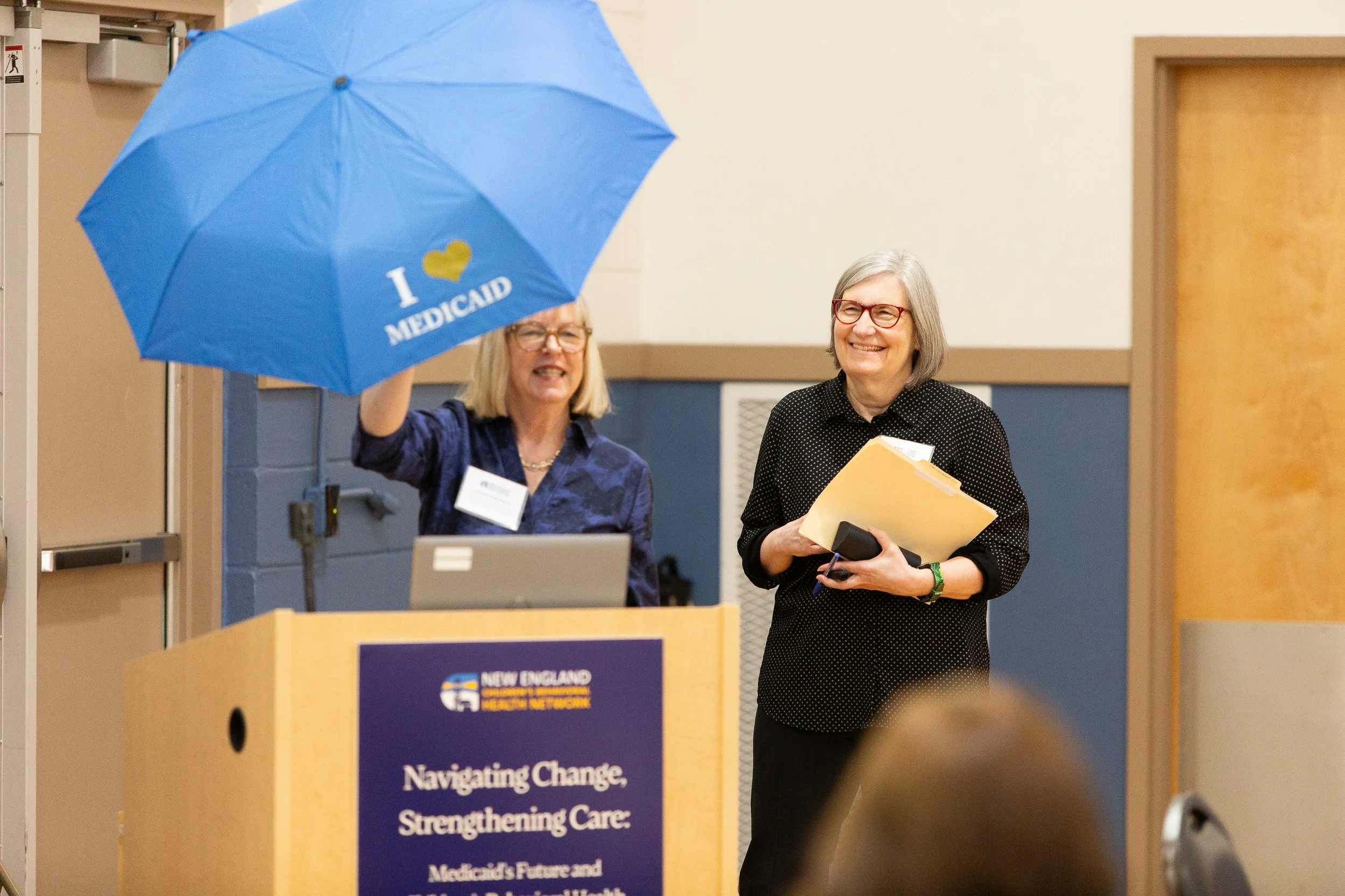
Navigating Change, Strengthening Care: Highlights from our May 7th event on Medicaid and Children's Behavioral Health
The New England Children's Behavioral Health Network’s May 7th conference brought together providers, policymakers, educators, advocates, and families from across New England to discuss the future of Medicaid and children’s behavioral health. Held at Bradley Hospital in Rhode Island, the event highlighted the growing urgency surrounding federal Medicaid cuts and their impact on children and families. Speakers emphasized that Medicaid remains the backbone of behavioral health access, especially for vulnerable children with complex needs. Joan Alker of Georgetown University outlined the policy threats posed by proposed federal legislation, including work requirements, reduced coverage protections, and major funding cuts. Dr. Keith Loud of Dartmouth Health described the strain on pediatric systems already facing workforce shortages and low reimbursement rates. State leaders from Rhode Island, Massachusetts, Connecticut, and Maine shared innovative approaches including Certified Community Behavioral Health Clinics, regional collaboration, workforce development, and sustainable funding models to strengthen children’s behavioral health systems.

Rural Health Transformation & Children's Behavioral Health - What Do New England States Say?
Across New England, states are leveraging the new Rural Health Transformation (RHT) Program to reimagine how children’s behavioral health services are delivered in rural communities. From expanding school-based behavioral health and telehealth access to strengthening Certified Community Behavioral Health Clinics (CCBHCs), states are investing in prevention, workforce development, data sharing, and integrated systems of care. While each state approaches transformation differently, common themes around access, innovation, and sustainability are emerging across the region. As implementation begins, regional collaboration and shared learning will be critical to improving outcomes for children, youth, and families living in rural communities. To know more about how Connecticut, Maine, Massachusetts, New Hampshire, Rhode Island, and Vermont are approaching this work, read the full blog.

Connection, Community & Children’s Behavioral Health
In recent years, many of us have felt the effects of isolation shaped by the pandemic, a screen-mediated world, political tension, rapid technological change, and even the isolating effects of long winters have led to the quiet erosion of connection.

What the Numbers Say: A 2025 Snapshot of Kids’ Well-Being in RI
Curious about how Rhode Island’s children are doing in 2025? The latest Rhode Island KIDS COUNT Factbook offers a deep dive into the health, education, economic well-being, and mental health of children across the state—spotlighting urgent issues like maternal and infant health, family structure, and behavioral health trends.
This data-driven report is not only a vital tool for policymakers and advocates—it’s a call to action for all of us working toward a more equitable system of care for children and families.
Read the blog for key highlights and insights.

Understanding Behavioral Health Approaches in CMS’s 2024 EPSDT Guidelines
Early and Periodic Screening, Diagnostic, and Treatment (EPSDT) is a critical Medicaid benefit designed to ensure that children and adolescents from low-income families receive the comprehensive and preventive healthcare they need to grow and thrive.

Know What’s at Stake: Utilizing the Collaborative Care Model to Improve Maternal Health Outcomes
2025 marks five years since the COVID-19 pandemic created unprecedented demand for children’s behavioral health and catalyzed huge changes in care delivery. Halfway through the decade, the world of telehealth, licensure compacts and mental health apps is dramatically different.

5 Trends in Children’s Behavioral Health in 2025
2025 marks five years since the COVID-19 pandemic created unprecedented demand for children’s behavioral health and catalyzed huge changes in care delivery. Halfway through the decade, the world of telehealth, licensure compacts and mental health apps is dramatically different.

Improving the Payer-Provider Relationship in Behavioral Health
The payer-provider relationship can often be fraught with difficulty and distrust, even as mental health parity rules become established. But in Rhode Island, Bradley Hospital and Blue Cross & Blue Shield of Rhode Island are finding common ground through collaboration.

The Year that Virtual Behavioral Health Became the New Normal
If 2020 was the year that the pandemic catapulted telehealth into the mainstream of healthcare delivery, 2023 was the year that it became the new normal, especially in behavioral healthcare. But for telehealth, as for other aspects of post-pandemic life, settling into the new normal hasn’t always been easy.

Expanding the Children’s Crisis Continuum of Care in Connecticut
Too often, youth experiencing behavioral health crisis face hospitalization or justice system involvement, instead of the home- and community-based services they need to de-escalate and stabilize.

Screening for Anxiety and Depression in Schools: Next Steps
Screening for Anxiety and Depression in Schools: Next Steps. How do we know if our children are struggling? And what do we do about it if they are? Since the pandemic shone a light on children and adolescents’ behavioral health, these questions are increasingly urgent for health care providers, educators and policy makers.