Rural Health Transformation & Children's Behavioral Health - What Do New England States Say?
By Ellen Hallsworth, BluePath Health
“Children in rural areas experience worse behavioral health”
Learn how have New England States responded in their applications to the Rural Health Transformation Program through this blog.
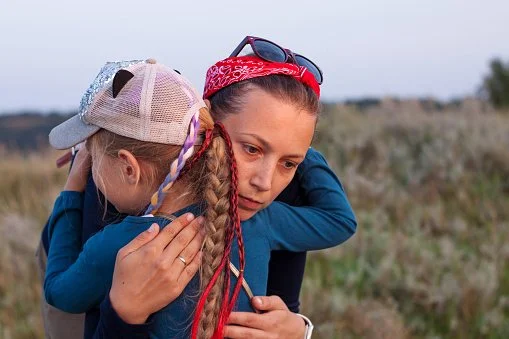
Across the U.S., children in rural areas experience more behavioral health challenges than their urban and suburban counterparts. Up to 19% of children in rural areas have been diagnosed with a behavioral health disorder, compared to 15% in urban areas. ADHD and some developmental disorders are more common in rural areas. Most starkly, the rural suicide rate for youth in rural areas is double the rate in urban areas, and the disparity seems to be widening. Workforce shortages and limited access to care compound existing problems.
It is no surprise that children’s behavioral health initiatives feature across all New England states’ applications to the Rural Health Transformation (RHT) Program. Announced as part of H.R.1 in summer 2025, the RHT Program aims to invest $50 billion over the next five years in transforming rural health infrastructure for future generations. Alongside RHT, H.R. 1 announced huge cuts to Medicaid, that will significantly affect access to care and the availability of services. The administration has been explicit that RHT funds should be used in ways that are transformative, and not to replace lost Medicaid funding. The emphasis on transformation is across five areas of healthcare:
Make rural America healthy again
Sustainable access
Workforce development
Innovative care
Tech innovation
These themes resonate across the healthcare system, but will be deeply familiar to anyone who has worked on children’s behavioral health in recent years. So how have states across New England responded? And what common themes and opportunities for collaboration emerge?
Connecticut
Just 13.8% of Connecticut’s population is rural. The state received an allocation of $154 million, or around $42 per capita, in the first year of RHT.
Connecticut’s RHT application stresses lack of access to behavioral health in rural areas as a major challenge. Investing in prevention, creating simpler entry points, and diverting behavioral health care from emergency departments are overarching themes in the application.
Key Initiatives
Expanding the ACCESS Mental Health consultation model into schools settings.
High Acuity School-Based Behavioral Health Programming - a model that strengthens behavioral health in rural school districts through trainings, implementation of evidence-based supports and referral systems.
Extending the Family Bridge universal nurse home visiting program into Northeastern and Northwestern Connecticut
Investing in data exchange by subsidizing participation in the state’s Health Information Exchange (HIE) Connie for FQHCs, behavioral health providers and others.
Maine
Nearly two-thirds of Maine’s population is rural. It was awarded $190 million in the first year of RHT, nearly $140 per Mainer. The project narrative calls out youth with behavioral health needs specifically as a population of focus, citing a 59% increase in suicide-related emergency department visits for children and youth from 2019 t0 2021.
Key Initiatives
Tele-behavioral (Tele-BH) health focused on youth and perinatal care, in partnership with schools. Maine will contract with a provider organization to coordinate these services, which will include psychotherapy, consultation, and medication management.
The construction of a psychiatric residential treatment facility (PRFT) in collaboration with the company Sweetser, to strengthen Maine’s continuum of care.
Co-location of primary care services in Certified Community Behavioral Health Clinics (CCBHCs).
The expansion of School-Based Health Centers (SBHCs), with a focus on increasing access to behavioral health care
Training and implementation support for evidence-based practices (EBPs)
Trainings and support to integrate peer support into multidisciplinary care settings, including EDs
Massachusetts
Massachusetts received $162 million in the first year of RHT. Only 8.9% of the Commonwealth’s population is rural and it received the lowest per capita allocation in New England, at around $23. Where other applications call out behavioral health needs specifically, Massachusetts treats behavioral health as one component of a more accessible, preventive system of care.
Key Initiatives
Rural Innovation for System Change & Effectiveness (RISE) - a real-time, cross-agency platform to track beds and service availability across systems. Modelled after the Admission Transfer Center Model at the Mayo Clinic, RISE aims to transform placement and care for youth and young adults with complex behavioral, developmental, and medical needs. The model would be complemented by training aimed at reducing the burnout that comes from working in a fragmented system. Blended and braided funding should ensure continuity beyond the five-year lifespan of RHT.
Expanded use of telehealth, including for behavioral health. Specifically, the plan is to expand the school-based telebehavioral health program into more rural areas.
Expanding rural training networks for a range of allied professionals, including behavioral health providers. These will be modelled on the existing Massachusetts Rural Workforce Training Network
Community Paramedicine models that emphasize diversion to non-ED settings, including CCBHCs
Expanded rural provider participation in the state’s HIE (The Mass HIWay), with an emphasis on behavioral and community health providers.
New Hampshire
New Hampshire received over $204 million for the first year of RHT, the largest award of all New England states. Approximately 42% of the state’s population is rural. The funding is roughly $142 per capita.
Behavioral health is a core part of the state’s vision for a primary care and prevention-focused system. The state’s application includes a designated lead for behavioral health, as part of the RHTP interagency team. Substantively, the application addresses behavioral health primarily through expansion of CCBHCs in rural areas, focused on converting the state’s remaining seven community mental health centers (CMHCs) into CCBHCs.
Key Initiatives
A Medicaid value-based payment model for children with complex behavioral needs
A care management organization (CMO) that creates a network of rural, community-based residential facilities reducing the need for out-of-state placements
Growing the workforce by funding graduate trainings at CMHCs
Expanding access to behavioral health through community-based telehealth access points
Integrating behavioral healthcare, SUD treatment and CHWs into rural primary care settings
Rhode Island
The funding mechanism for RHT favored smaller states. Despite being a largely urban/suburban state with a rural population of just 9.7%, Rhode Island was awarded $156 million in the first year of RHT, around $142 per capita.
As in Massachusetts, behavioral health is contextualized as one aspect of transformation to a system that makes all types of care more accessible. Rhode Island’s creation of a structure to deliver improvements in rural care is unique regionally: Community Clinical Care Hubs (Hubs) will work with Rural Community Health Networks (Networks), mobilizing resources to build healthier communities.
Key Initiatives
Establishing a 24/7 walk-in behavioral health crisis and stabilization center, establishing an SUD bridge clinic, and embedding peer navigators in EDs
Enhanced partnerships with schools, enabling them to function as access points for physical and behavioral health needs, both through in-person and telehealth care. Schools will be integrated into FQHC-school district partnerships and a system of professional development supported by the Rhode Island Department of Education (RIDE). Peer navigators are also intended to work in partnership with schools.
Working with the Narragansett Indian Health Center to improve access to care through embedding CHWs and behavioral health aides
Continuing education programs that connect new providers to rural care delivery. Specialized behavioral health certificate training will aim to strengthen home-based care providers skills.
Vermont
Vermont received $195 million for the first year. 66% of the state’s population is rural, resulting in per capita funding of $303. This is highest per capita amount in the region and the third highest nationally (after Alaska and Wyoming).
Vermont’s application for RHT mentions that the state is experiencing a crisis in youth mental health, but concentrates on building sustainable infrastructure across the health care delivery system. Sustainability will depend on shifting care away from low value services to preventive care, including behavioral health. Compared to other RHT applications, Vermont’s has a greater emphasis on payment reform, including value-based payment, per member per month (PMPM) models, and performance-based reimbursement\5. Coordinating with other CMS initiatives, including the AHEAD model, is an important part of the plan. The state’s Designated Agencies (DAs) act as coordinating organizations for mental health. Some, but not all, DAs are CCBHCs.
Key Initiatives
Five additional CCBHCs (there are currently two)
Integrating mental health and SUD treatment into primary care settings
Expansion of mental health and SUD urgent care
Mobile units offering mental health and SUD care, alongside physical and dental care
Expansion of the VTCPAP initiative, providing real time consultation, training and resources that allow children with mild to moderate mental health needs to be cared for in their primary care homes.
Purchasing a statewide closed-loop referral system that enables real-time data sharing across physical and mental health care, and social services.
A centralized tool to guide interfacility transfers. Though the system is intended to operate across all hospitals and healthcare providers, it would be modelled after Oregon’s Behavioral Health Coordination Center.
Summary
What Role Does Behavioral Health Play?
A key distinction between states’ RHT applications is that while some (Connecticut, Maine and New Hampshire) call out behavioral health as a separate priority, for others (Massachusetts, Rhode Island, Vermont), it’s one among several parts of a system of care that needs to work better for rural communities.
What Are the Common Themes?
Across all states, several common themes emerge:
CCBHCs - in all applications, the CCBHC model is envisioned as a cornerstone of the behavioral healthcare system. Given that CCBHCs were only established in the Excellence in Mental Health and Addiction Treatment Act of 2021, it’s notable that in less than five years, they have come to play such a pivotal role.
Continuum of care - across applications there are initiatives that bring care closer to home (school-based care, mobile units, urgent care and walk-in facilities, and primary care integration), but also investment in more acute facilities (PRTFs and residential facilities).
Training and workforce - States share an ambition to embed evidence-based practices, enhance and integrate the peer support workforce and CHWs, reduce burnout and incentivize providers to work in rural regions.
Telehealth - Telehealth plays an important role in school-based care and mobile care delivery initiatives. Several plans specifically call out the role of the pediatric mental health access program. With federal funding coming to an end, states have developed different models for sustaining this. Link to Pediatric Mental Health Access Program webinar.
Data sharing - From capacity tracking to closed-loop referrals and incentivizing participation in HIEs, all states acknowledge the need for greater interoperability and more real-time data linking behavioral health to other parts of the system of care.
What About Implementation?
States have different approaches to implementing the children’s behavioral health initiatives outlined in their RHT applications. Connecticut and Maine stress building on existing infrastructure, including the ACCESS mental health program, school-based models, and training networks. Maine, on the other hand, acknowledges a need to partner with external provider organizations to build capacity. Other states look to borrow from what works elsewhere, Vermont from Oregon’s Behavioral Health Coordination Center and Massachusetts from the Mayo Clinic’s Admission Transfer Center Model.
This first year of RHT will be crucial, as states work to meet rapidly approaching deadlines to stand up programs and obligate funds for the first year of funding. CMS will make determinations about the second year of funding in October 2026 based on states’ initial performances, putting added weight to demonstrating early success. Some states such as Vermont have already begun to put out Requests for Proposals (RFPs) and Notices of Funding Opportunities (NOFOs), and many other states are set to follow this summer. As states put plans for improving children’s behavioral health into practice, learning from one another will be crucial for delivering improvement at a regional level.