A Case for Community Intelligence
Authors:
Josef Ernst, MD candidate, Harvard Medical School
Garrett Wheeler, MD candidate, The Warren Alpert Medical School of Brown University
Daniel Palazuelos MD, MPH, Assistant Professor of Medicine, Harvard Medical School, Associate Physician in the Department of Medicine, Brigham and Women's Hospital, Assistant Director of the Hiatt Global Health Equity Residency, Brigham and Women's Hospital, Director of Community Health Systems, Partners In Health, Director of the Office for Community Centered Medical Education, Harvard Medical School, Board Member for the Community Health Impact Coalition (CHIC), the Financing Alliance for Health (FAH), and Compañeros En Salud (CES)
“Community intelligence is the lived experience, knowledge, and trust that comes from being embedded in the places where people live, love, work, play, and pray”
Within the high walls of our medical institutions, artificial intelligence (AI) has begun to permeate every corner. Residents use OpenEvidence to review a subject before rounds; medical students use ChatGPT and Gemini to condense oceans of information into manageable summaries. Earlier this year, OpenEvidence achieved the milestone of 1 million queries a day, meaning that, on average, physicians in the United States consulted the service about a patient at least once in a day.
These technologies provide unprecedented access to information presented with the appearance of profound expertise; as a result, AI use in medicine is growing exponentially, both in care and education. But the outputs are only as good as the inputs. As we rush to kneel at the altar of these large language models (LLMs), we should ask: do they truly have the information needed to make the best decisions in clinical care?
As clinicians who have seen patients across many contexts, we propose that the US healthcare system would benefit from access to another pool of insights processed by a new algorithm of intelligence – Community Intelligence.
By “community intelligence,” we mean the lived experience, knowledge, and trust that comes from being embedded in the places where people live, love, work, play, and pray. Community-level caregivers, especially community health workers (CHWs), hold this expertise, and we’re dismayed that they are increasingly vanishing from our own hospitals and clinics.
In rural Chiapas, Mexico, we’ve seen “acompañantes”—female community leaders who walk alongside families as they navigate health and social challenges—go far beyond taking chief complaints and vital signs.
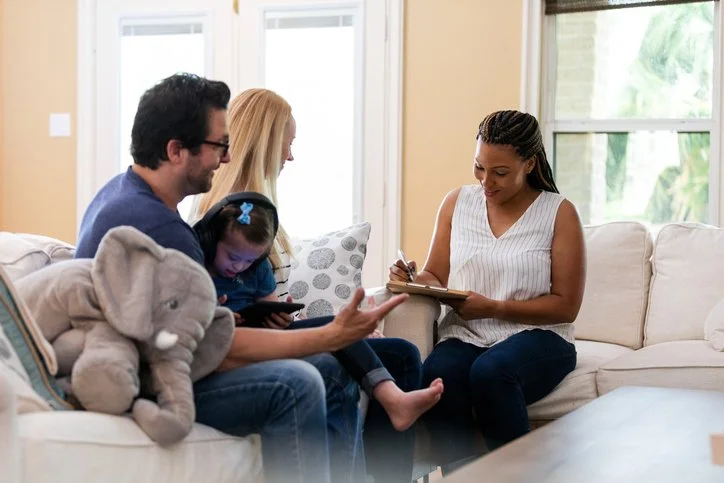
Over a freshly brewed coffee on the couch with their patients, these CHWs have time and interest to go deeper than the medical interview. They ask not only about physical symptoms, but also about how the farm is doing, how a family is coping, and how recent political struggles have affected their lives. This relaxed approach does not mean unserious work; the relationships they cultivate build trust, which becomes indispensable for better, more holistic care.
For example, young people trying to access contraception methods in rural Chiapas face many local nuances that require community knowledge and sensitivity. One teenager, ‘Gaby,’ sought care but was terrified that her family would find out. When the acompañante, ‘Mari,’ visited her house, she skillfully facilitated a private space for Gaby so that she could express herself freely, without fear, and get the quality care that she needed from a local primary care doctor.
Mari knew the girl’s family, the school dynamics, and the logistics to reach the nearest clinic. Through her community intelligence, trained on a lifetime of experience, Mari provided the brick-and-mortar health system something that was previously unavailable. For Gaby, this
meant an averted unwanted pregnancy, information about how to avoid STIs, and knowledge that she always had someone to turn to if she felt sad, ashamed, or unsafe.
In the informal settlements of Lima, Peru, we’ve witnessed CHWs hike for kilometers searching for a single unresponsive patient who has stopped taking their tuberculosis medications—not simply because their contracts require it, but because they feel they must, knowing the human cost of failing to act. Their proximity to the individuals they serve, and the communities they belong to, creates a form of accountability and solidarity that cannot be prescribed in a clinical protocol or mandated by a workplan.
Through their embeddedness in their communities, CHWs reimagine the patient-caregiver relationship. Care is no longer transactional; it becomes an act of responsibility to a neighbor, a friend, and a fellow community member. They do what doctors and nurses often cannot, because they have the positionality, time, and history necessary to enter these spaces.
As doctors, we see CHWs as invaluable team members. We are taught that a social history consists of questions such as, “Where do you live?” or “Do you use recreational drugs?” But these questions can only scratch the surface of community intelligence. A physician may discover where a patient lives, but a CHW knows how to get there without a GPS or a vehicle. A physician may know whether a patient uses drugs, but a CHW already knows that the patient uses them to escape the pain of a recent maternal loss. A doctor may be friendly with a patient, but the CHW is already their longtime friend.
Sadly, despite the clear benefits of Community Intelligence in clinical care, we are witnessing not only stagnation in its appreciation but a regression.
In much of the world, the vast majority of CHWs are volunteers, having never been paid in the first place despite their vitality.
Back home in Massachusetts and Rhode Island, we keep asking, where are the CHWs in both medical education and the medical team?
In medical school, many students do not even know what CHWs are. They are often omitted from clinical scenarios, curricula, and health-worker panels. During COVID-19, CHWs increasingly appeared in government-funded grants, which gave us great cause for hope, but their salaries dried up as quickly as the pandemic funding.
When they do appear in our clinical spaces, CHWs are often siloed or only temporarily available due to inconsistent grant funding. As of today, 26 states still do not reimburse CHWs through Medicaid. Rhode Island has even considered removing CHWs from Medicaid coverage, despite evidence that CHW programs can generate $2.12 in health care savings for every dollar invested.
Although AI could be a powerful tool for care and for justice, no LLM can sit in a living room and notice the quiet tension resting on an old man’s shoulders. When a CHW asks, “How are you
holding up?” the question is amplified through the CHW’s understanding of decades of unpublished wisdom about the man’s context, his family dynamics, and the importance of these tender moments in care.
So we ask, if AI is increasingly welcomed onto the clinical team, why not CI? Could we not also go all in on CHWs, as permanent, respected members of clinical teams?
———————————————————————————————————————————————————————
Interested in contributing to our blog? We welcome perspectives from researchers, clinicians, policymakers, advocates, and community members working to advance children's behavioral health. If you'd like to contribute to a future blog, please reach out to us at info@necbhn.org.